Posts

Back to the archives.
Image
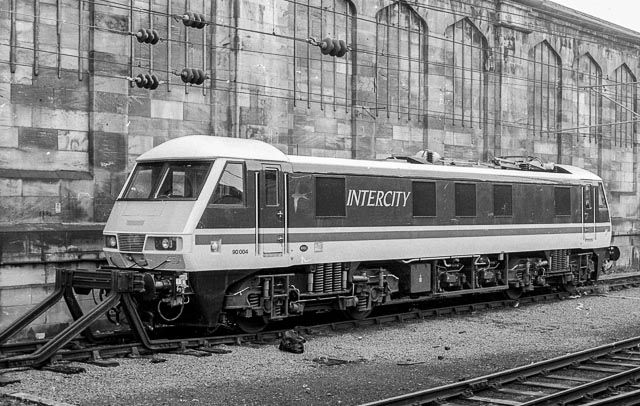
These images are from a trip to Carlisle back in the late 1980s. I don't have a precise date but the class 90 above was in ex-works condition so I assume it was almost new. Class 85s were still around at the time although I think they were limited to secondary duties. This loco now works in East Anglia and is named "City of Chelmsford". This class 86 was re-geared to work freight trains and in this shot has a bullion van coupled next to it. This picture appeared in the "Railway Magazine" shortly after this time. The class 87s were doing a large proportion of the work on Anglo-Scottish trains at this time. Among the electrics were a procession of class 47s. The class 85 is still waiting in the middle road. Another class 86, but on a train of bogie open wagons this time.
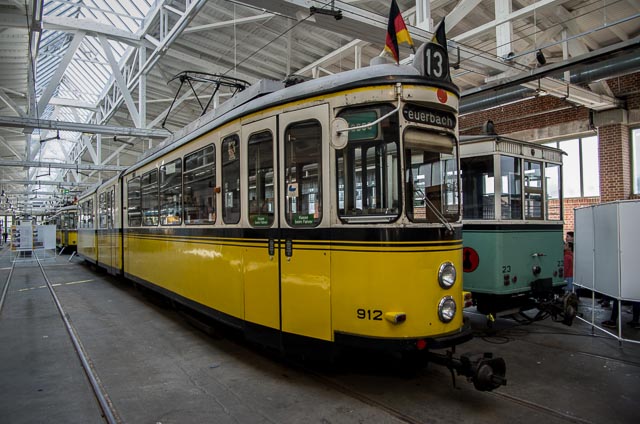
Vintage trams from Germany.

Image
Something a little different this time. Vintage trams seen at a recent visit to the Tramway Museum at Stuttgart (Strassenbahnwelt Stuttgart). The tramways were not just for passengers but trucks like this one took all manner of produce and materials to town. The tramway tracks were also used by industrial diesels and hopper wagons to remove rubble from the streets of the city after the Second World War. We were grateful to the volunteer who, in perfect English, told us the stories of the tramways and allowed us into a number of the trams which were locked.

More red trains.... but nothing to do with Virgin East Coast this time.

Image
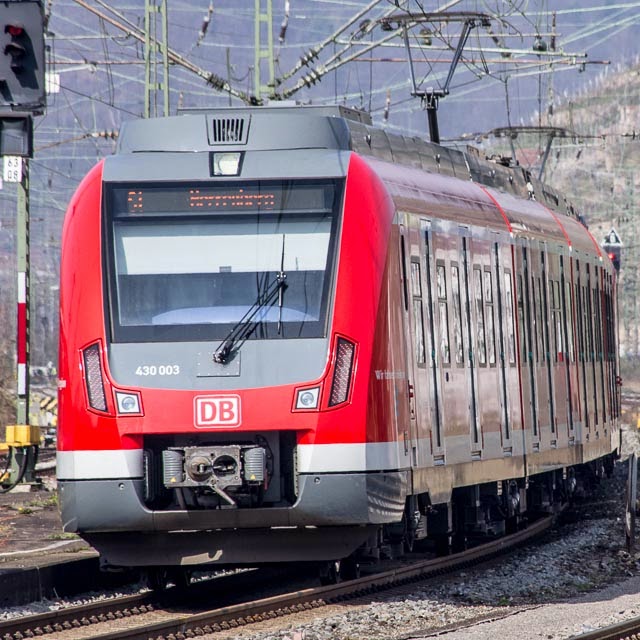
An afternoon at Esslingen east of Stuttgart resulted in shots of lots of red trains.... this is one of the new class 430 S-Bahn four car articulated units recently introduced to replace the remaining class 420s in the Stuttgart suburban area. Built in the mid 1980s for East German railways these class 143s can be seen all over Germany today. Two class 420 units leaving for Stuttgart. 3 class 612 two car tilting diesel hydraulic diesel units head north. Class 146 propels its train out of the station with a service to Ulm. Another class 146, this time heading for Stuttgart. An Inter City train being propelled through Esslingen. Class 430 four car unit. Another class 146 heading north. This old DVT brings up the rear of the train seen above on a service to Osterburken. And finally.... not a red train this time but a privately owned by NIAG freight co. This is a Bo-Bo loco and was running light towards the yards at Stuttgart.

Virgin East Coast Trains

Image
March the first saw the beginning of the new East Coast Trains franchise. While it consists of a consortium of Stagecoach and Virgin, the trains are branded as Virgin Trains. This is the interim livery. So far only one complete set has been reliveried with the complete branding and it arrived in York on the morning of the 2nd complete with many of the company's managerial staff.

East Coast Trains.

Image
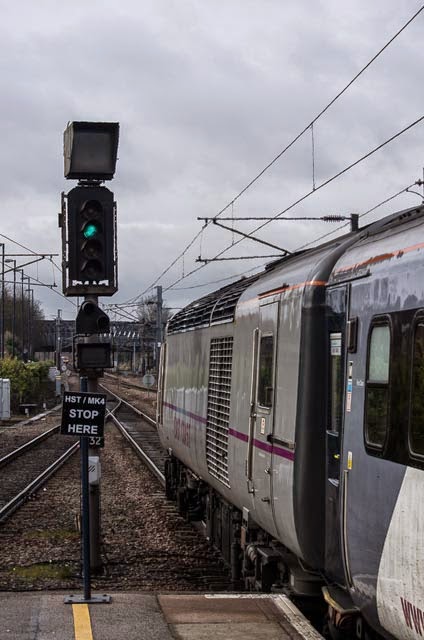
     East Coast HST sets out non stop for Kings Cross. Loco 91114 has two pantographs as seen above. This was an experiment in "belt and braces" thinking. I have never seen the second pantograph in use.  An up express enters York station from the north past the Scarborough bridge worksite.

Bescot 1963.

Image
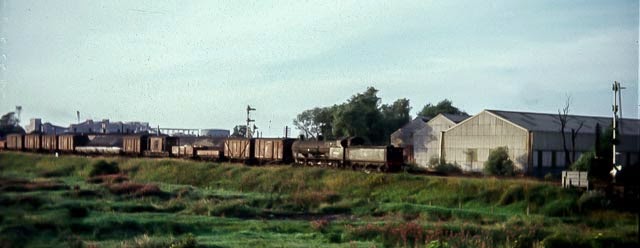
LNWR 0-8-0 approaches Bescot from the North with a mixed freight. Walsall gasworks can be seen on the skyline. Class 5 approaches the station from the South, probably bound for the shed. So far there is little evidence of the extensive modernization of the marshalling yard. Two LNWR 0-8-0s behind the station.

Bristol Temple Meads - May 1987.

Image
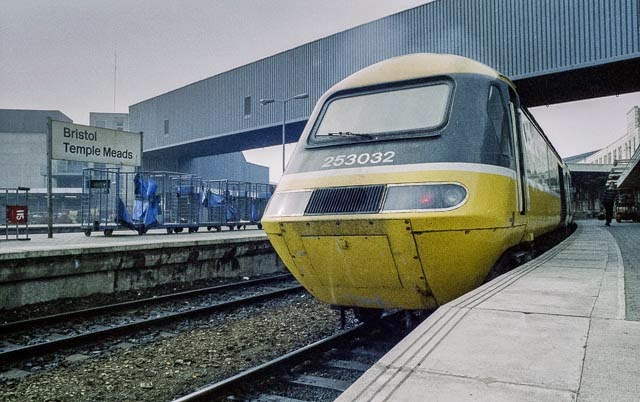
Back to a time when locomotives were to be seen waiting at stations for their next duty... and even then the ubiquitous HST reigned supreme on the London (Paddington) services from the West country. Seem to remember seeing somewhere that the Post Office bridge over the North end of the station (seen here) is about to be removed. The class 33s were originally built by Birmingham Railway Carriage and Wagon Company for use on the Southern Region, but by this time they could be seen on the south coast to Cardiff trains via Bristol. This example was waiting around the station for the next service.